The Ultimate Classic Cheesecake Recipe (No Water Bath Needed!)
Are you searching for a truly phenomenal cheesecake recipe? Look no further! This simple guide helps you create a rich, creamy, and wonderfully smooth cheesecake every single time. Best of all, you can achieve that perfect texture without the hassle of a complicated water bath. Get ready to impress everyone with this classic, no-fail dessert that is perfect for any celebration or a simple sweet craving.
Why You’ll Love This Cheesecake
This particular cheesecake recipe stands out for several excellent reasons.
- It boasts an incredibly creamy, melt-in-your-mouth texture that rivals any bakery.
- The baking process is refreshingly simple and straightforward, perfect for beginners.
- You avoid the common stress of a water bath, making baking much easier.
- It delivers that classic, rich flavor profile everyone adores in a traditional cheesecake.
- You will achieve impressive, picture-perfect results with minimal effort, guaranteed.
Ingredients
Gather these quality ingredients to create a truly delicious cheesecake recipe!
For the Graham Cracker Crust:
- 1 ½ cups graham cracker crumbs (170g)
- 2 Tablespoons sugar
- 1 Tablespoon brown sugar (can substitute white)
- 7 Tablespoons butter, melted
For the Cheesecake Filling:
- 32 oz cream cheese², softened to room temperature (910g)
- 1 cup sugar (200g)
- ⅔ cups sour cream (160g)
- 1 ½ teaspoons vanilla extract
- ⅛ teaspoon salt
- 4 large eggs, room temperature, lightly beaten
Notes & Substitutions:
Always use full-fat brick cream cheese for the best texture and flavor; avoid whipped or spreadable varieties. Sour cream adds a delightful tang and helps keep the cheesecake moist and tender. Opt for real vanilla extract for a superior aroma and taste. For the crust, feel free to swap graham crackers with Oreo crumbs or shortbread cookies for a different twist. As detailed by Sally’s Baking Addiction, room temperature ingredients are crucial for proper emulsion and texture in baking. Ensure all cold ingredients, especially cream cheese and eggs, come to room temperature before mixing to prevent lumps and ensure a smooth batter.
Equipment
Having the right tools makes this cheesecake recipe a breeze to prepare.
- 9-inch springform pan: Essential for easy removal.
- Stand mixer or hand mixer: For achieving a smooth, lump-free batter.
- Large mixing bowls: For combining ingredients.
- Rubber spatula: For scraping down the bowl and gentle folding.
- Measuring cups and spoons: For accurate ingredient portions.
- Cookie sheet (optional): To catch any potential leaks from the springform pan.
Instructions
Follow these clear, step-by-step instructions for your classic cheesecake recipe. Achieving a perfect bake is simpler than you think!
For the Graham Cracker Crust:
Preheat your oven to 325F (160C). Begin preparing your graham cracker crust by combining graham cracker crumbs, sugar, and brown sugar in a bowl. Stir these dry ingredients well to mix thoroughly. Pour in the melted butter and use a fork to fully incorporate all ingredients. Transfer the crumb mixture into a 9-inch springform pan. Press the mixture firmly and evenly into the bottom and slightly up the sides of your pan. Set the prepared crust aside while you make the filling.
For the Cheesecake Filling:
In the bowl of a stand mixer fitted with the paddle attachment, or using a large bowl with a hand mixer, add the softened cream cheese. Beat until it becomes smooth and creamy, being careful not to over-beat and incorporate too much air. Add the sugar and continue stirring until the mixture is creamy again. Next, add the sour cream, vanilla extract, and salt. Mix until these ingredients are just well-combined. Pause periodically to scrape the sides and bottom of the bowl with a spatula, ensuring all ingredients are evenly incorporated. With the mixer on low speed, gradually add the lightly beaten eggs, one at a time. Mix each egg in just until it is incorporated before adding the next. Once all eggs are added, use your spatula to scrape the sides and bottom of the bowl again. This ensures a uniform and smooth batter for your ultimate cheesecake recipe.
Baking the Cheesecake:
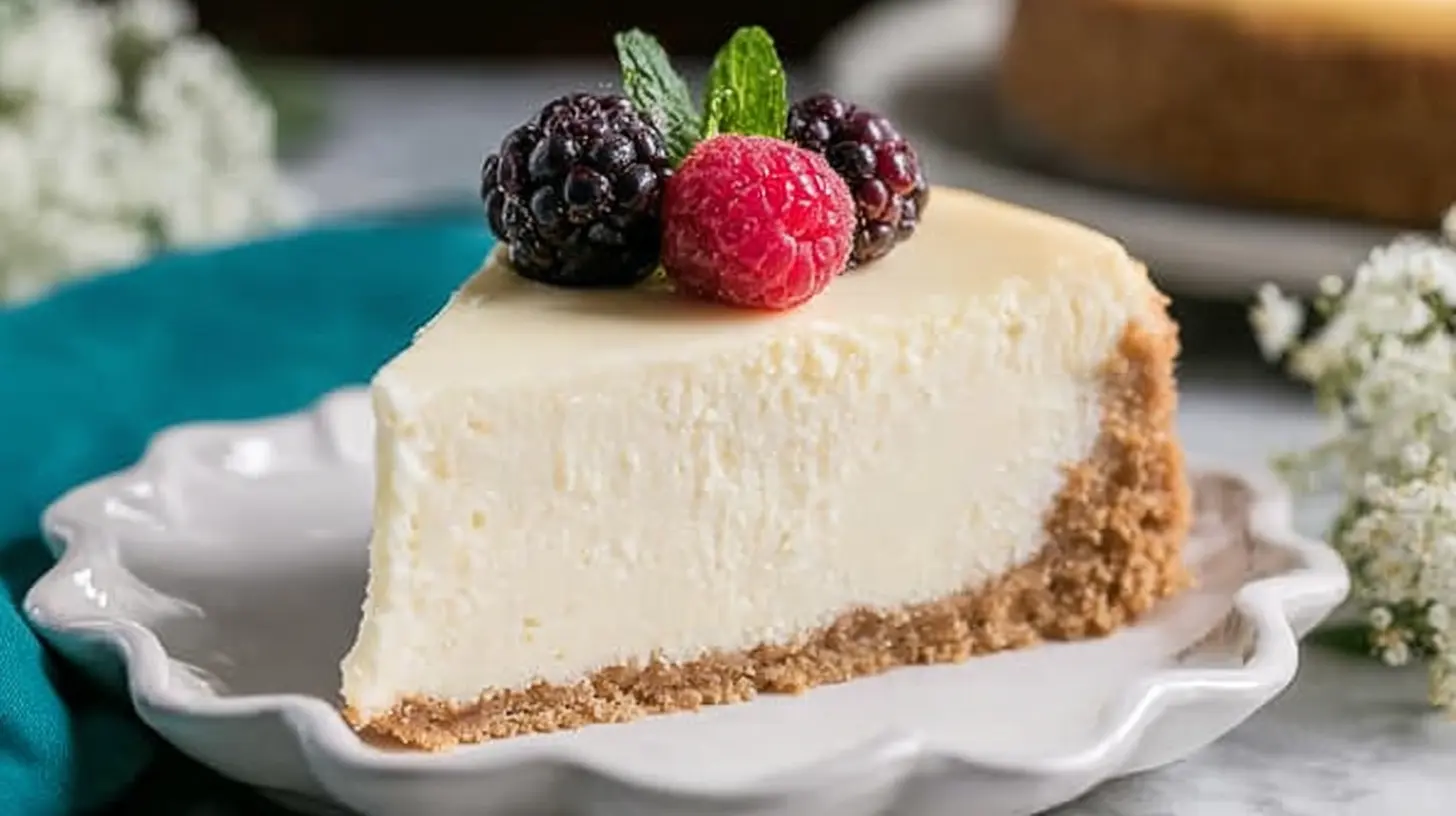
Carefully pour the cheesecake batter into your prepared springform pan. To safeguard against any potential leaks, place the springform pan onto a cookie sheet lined with foil. Transfer the pan to the center rack of your preheated oven. Bake at 325F (160C) for approximately 50-60 minutes, or potentially longer as needed. Look for the edges to have slightly puffed up and possibly started to turn a light golden brown. The center of the cheesecake should still have a slight jiggle when gently nudged, but it should spring back to the touch. It is crucial not to over-bake, as this will compromise the creamy texture.
Cooling and Chilling:
Once baked, remove the cheesecake from the oven. Allow it to cool on top of the stovetop for 10 minutes. After 10 minutes, use a thin knife to gently loosen the crust from the inside edges of the springform pan. This vital step helps prevent cracks as your cheesecake cools and naturally shrinks. Do not remove the ring of the springform pan yet. Allow the cheesecake to continue cooling at room temperature for another 1-2 hours until it is almost cool. Finally, transfer the cheesecake to the refrigerator and chill overnight, or for a minimum of 6 hours. Remove the ring of the springform pan just before serving. Return it to the pan to store for freshness.
Pro Tips & Troubleshooting
Follow these simple tips to ensure your cheesecake recipe turns out perfectly every time.
Achieving a Smooth, Creamy Texture:
Always start with room temperature ingredients, especially the cream cheese and eggs. This prevents lumps and ensures a perfectly smooth batter. Avoid over-mixing, particularly once you add the eggs, as this incorporates too much air, leading to a less dense texture.
Preventing Cracks:
Mix gently to avoid excess air. Do not open the oven door frequently during baking. Loosening the crust from the pan sides after initial cooling is crucial. Ensure a gradual cooling process, first on the stovetop, then at room temperature, before chilling.
Avoiding a Soggy Crust:
Make sure the melted butter in your crust is very well distributed to bind the crumbs properly. Pre-baking the crust for 8-10 minutes can help create a barrier against moisture, though it’s optional. Avoiding a water bath also inherently prevents a soggy crust.
Adjusting for Oven Variations:
Oven temperatures can vary, so use an oven thermometer for accuracy. Always check for doneness visually by looking for the jiggle, rather than relying solely on the clock. This ensures a perfectly baked cheesecake.
Serving, Storage & Variations
This versatile cheesecake recipe offers many possibilities for enjoyment and customization.
Serving Suggestions:
Serve slices plain to appreciate the classic flavor, or enhance them with fresh berries like strawberries, raspberries, or blueberries. Drizzle with a rich raspberry or strawberry fruit sauce. A touch of chocolate ganache or warm caramel sauce also makes a decadent topping. For an extra touch of indulgence, top with a dollop of homemade whipped cream.
Storage Instructions:
Store any leftover cheesecake in the refrigerator. Ensure it is tightly covered with plastic wrap or aluminum foil to prevent it from drying out or absorbing other odors. For best quality and taste, consume your homemade cheesecake within 3-5 days.
Freezing Instructions:
This cheesecake freezes beautifully. You can freeze it whole or cut it into individual slices. Wrap the cheesecake tightly first in plastic wrap, then again in aluminum foil to prevent freezer burn. Thaw frozen cheesecake overnight in the refrigerator before serving.
Flavor Variations:
Easily transform this classic cheesecake recipe. Add melted chocolate to the batter for a rich chocolate cheesecake, or pumpkin puree and spices for a seasonal treat. Incorporate lemon zest and juice for a bright lemon cheesecake, or key lime juice for a tangy Key Lime version. You can also swirl fruit purees or caramel into the batter before baking for a marbled effect.
Nutrition
Disclaimer: The following nutrition information is an estimate based on the ingredients and methods described in this cheesecake recipe. Actual values may vary depending on specific brands, ingredient substitutions, and preparation techniques.
| Nutrient | Amount |
|---|---|
| Serving Size | 1 slice |
| Calories | 500 kcal |
| Carbohydrates | 32 g |
| Protein | 8 g |
| Fat | 36 g |
| Saturated Fat | 22 g |
| Polyunsaturated Fat | 1 g |
| Monounsaturated Fat | 3 g |
| Cholesterol | 179 mg |
| Sodium | 450 mg |
| Potassium | 45 mg |
| Fiber | 1 g |
| Sugar | 24 g |
| Vitamin A | 1200 IU |
| Calcium | 80 mg |
| Iron | 0.9 mg |
FAQ
- Do I need a water bath for cheesecake?
No, this cheesecake recipe is specifically designed to be baked without a water bath. Following our cooling instructions prevents cracks and maintains a creamy texture. - How do I prevent cracks in my cheesecake?
Ensure all ingredients are at room temperature, avoid over-mixing, and loosen the cheesecake from the pan edges after its initial cool down. Gradual cooling is key. - Why is my cheesecake lumpy?
Lumps typically occur if your cream cheese or eggs are not at room temperature before mixing. Always soften your ingredients fully first. - Can I use a different type of crust?
Absolutely! Oreo crumbs, shortbread cookies, or even gingersnaps make excellent alternatives to graham crackers for the crust. - Can I freeze leftover cheesecake?
Yes, cheesecake freezes very well. Wrap it tightly in plastic wrap and then foil, and thaw it overnight in the refrigerator.
Conclusion
This ultimate classic cheesecake recipe proves that creating a truly exceptional dessert doesn’t have to be complicated. With our simple, no-water-bath method, you can achieve a perfectly rich, creamy, and smooth cheesecake every single time. Say goodbye to guesswork and hello to a show-stopping dessert that’s easy enough for any home baker. Give this no-fail method a try tonight; we can’t wait to hear how much you love it! Share your delicious results and leave a comment below.
The Ultimate Classic Cheesecake Recipe (No Water Bath Needed!)
Ingredients
Equipment
Method
- Preheat your oven to 325F (160C).
- For the crust, combine graham cracker crumbs, sugar, and brown sugar; then add melted butter and mix well with a fork.
- Press the crumb mixture firmly into the bottom and up the sides of a 9-inch springform pan and set it aside.
- In a large bowl, beat the softened cream cheese until it is smooth and creamy, being careful not to over-beat.
- Add the sugar to the cream cheese and continue to beat until the mixture is creamy again.
- Incorporate the sour cream, vanilla extract, and salt, mixing until well-combined, and scrape down the sides of the bowl as needed.
- Gradually add the lightly beaten eggs one at a time on low speed, mixing just until each egg is incorporated, then scrape the bowl to ensure even mixing.
- Pour the cheesecake batter into the prepared springform pan and place the pan on a foil-lined cookie sheet to prevent leaks.
- Bake for 50-60 minutes at 325F (160C), until the edges are slightly puffed and golden, and the center is still jiggly but set.
- Remove the cheesecake from the oven and cool on top of the oven for 10 minutes, then gently loosen the crust from the pan with a knife to prevent cracks.
- Allow the cheesecake to cool for an additional 1-2 hours at room temperature before transferring it to the refrigerator to chill overnight or for at least 6 hours.
Notes

Emily Thompson is a home cook and food enthusiast who believes that great meals bring families together. She loves exploring creative twists on classic American comfort food, always testing new ideas in her kitchen. Emily is passionate about sharing simple, practical recipes and time-saving tips to help busy people enjoy cooking at home. Her approachable style makes every dish accessible, delicious, and perfect for those seeking inspiration for everyday meals and special occasions. Find Emily’s latest creations and kitchen wisdom on yumeasymeals.com.