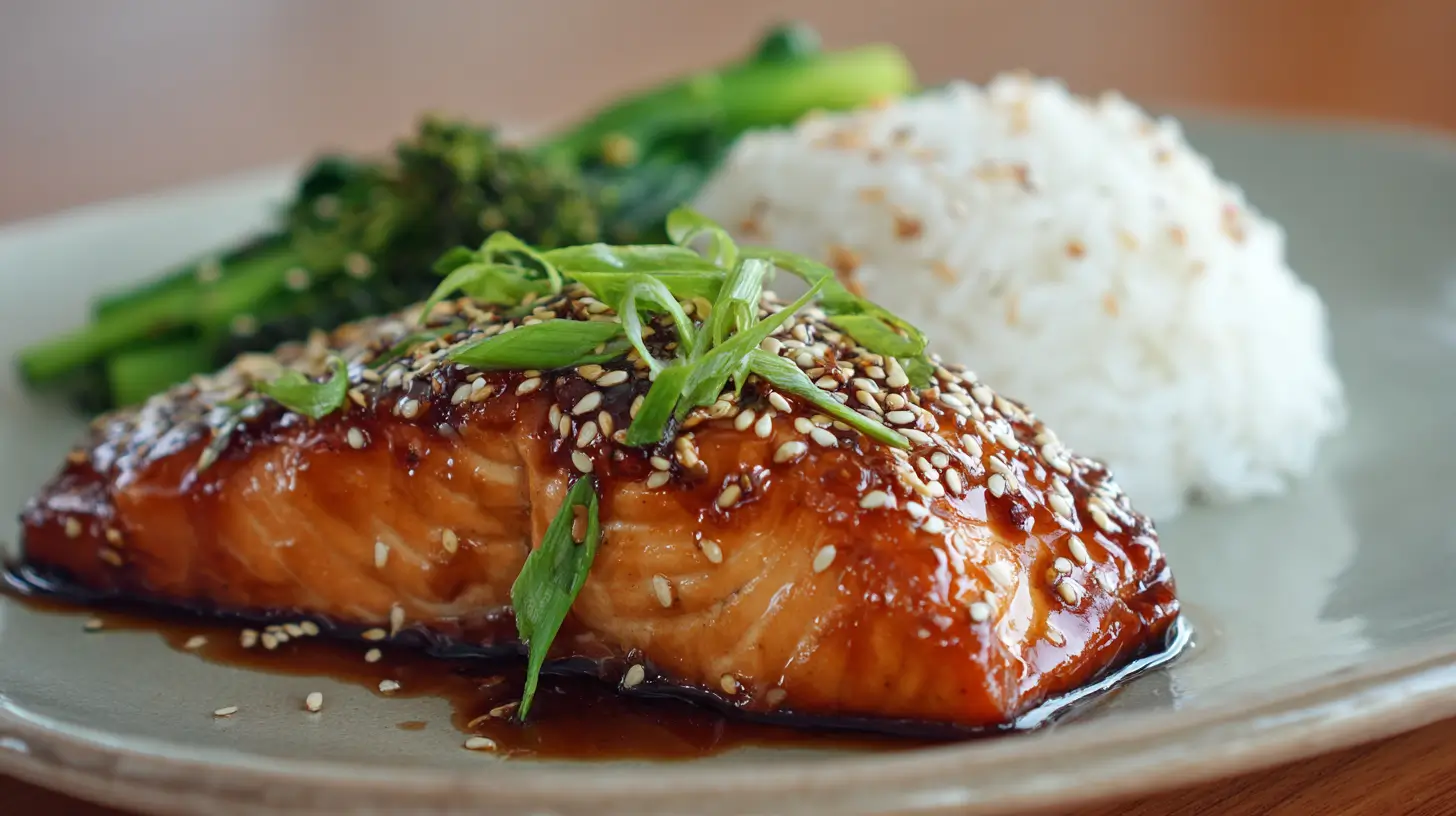
The Japanese miso salmon recipe offers a delightful journey into savory umami flavors. This impressive dish is perfect for any night, bringing a touch of gourmet taste right to your kitchen. You’ll love the quick prep time, minimal ingredients, and simple steps involved. Get ready to enjoy a flavorful, healthy, and satisfying weeknight meal that tastes like it came from your favorite restaurant.
Why You’ll Love This Miso Salmon
This versatile miso salmon recipe is a fantastic choice for home cooks looking for big flavor with little fuss. Here is why it will quickly become a family favorite:
- Effortless Preparation: A simple marinade comes together in minutes, requiring minimal active cooking time.
- Quick & Convenient: Your delicious salmon can be ready to serve in under 30 minutes, perfect for busy evenings.
- Rich Umami Flavor: The miso marinade infuses the fish with a deep, savory, and slightly sweet taste that is truly irresistible.
- Healthy & Satisfying: Packed with lean protein and beneficial omega-3 fatty acids, it’s a nutritious meal choice.
- Versatile Cooking: Choose to broil for crispy edges or bake for tender, flaky perfection – either way, it’s delicious.
Ingredients
Gather these simple ingredients to create your savory miso salmon recipe:
- 2 skin-on salmon fillets: Aim for about 1 inch thick for optimal cooking.
- 2 Tbsp white miso: This provides the sweet, savory, and perfectly balanced base flavor.
- 1 Tbsp sake: Adds an authentic Japanese depth of flavor and tenderizes the fish.
- 1 Tbsp mirin: A touch of sweetness and a beautiful glossy finish come from this essential ingredient.
- 1 Tbsp soy sauce: Provides an umami boost and seasons the marinade.
- ¼ tsp toasted sesame oil: Infuses a wonderfully aromatic touch.
- Optional Garnish: ½ tsp toasted white and black sesame seeds and 1 chopped green onion.
Notes & Substitutions
Selecting the right ingredients ensures the best outcome for your miso salmon recipe. Choose salmon fillets that are uniformly about 1 inch thick for even cooking. While white miso is ideal for its balanced profile, you can adjust the quantity if using darker, saltier red miso. If you prefer non-alcoholic alternatives, substitute sake with chicken or vegetable broth, and mirin with a pinch of sugar dissolved in water. Always opt for authentic Japanese soy sauce for the most traditional taste.
Equipment
You won’t need many specialized tools for this impressive dish. Here’s what you’ll need for your miso salmon recipe:
- Large bowl or a shallow tray for marinating the fillets.
- Baking sheet for cooking the salmon.
- Aluminum foil or parchment paper to line the sheet.
- Fish boning tweezers (optional, but helpful for prep).
- An instant-read thermometer is highly recommended for perfect doneness.
Instructions
Prepare to create a restaurant-quality meal at home with this simple miso salmon recipe. Follow these steps for flaky, flavorful fish every time. Remember, this recipe requires a marination time of 1–2 hours.
- Prepare Salmon: Check your 2 skin-on salmon fillets carefully for any scales or tiny bones. Run your fingers along the flesh and skin, then remove any found bones with tweezers and scrape off scales with a knife. Pat the fillets completely dry with paper towels.
- Make Marinade: In a large bowl or flat tray, whisk together 2 Tbsp miso, 1 Tbsp sake, 1 Tbsp mirin, 1 Tbsp soy sauce, and ¼ tsp toasted sesame oil until well combined.
- Marinate Salmon: If your salmon isn’t already in individual portions (about 6 oz / 170 g each), slice it. Place the salmon pieces into the marinade, skin side up. Spoon the marinade evenly over the flesh, sides, and skin. Cover the bowl or tray and refrigerate for 1–2 hours for fillets up to 1 inch thick. For thicker cuts, you can marinate for up to 3 hours. Avoid marinating overnight as the miso is quite salty.
- Prepare for Cooking (Broil Method): Preheat your broiler to High (550°F/290°C) and position a rack in the center, about 9 inches (23 cm) from the heating element, for 5 minutes. Line a baking sheet with aluminum foil (parchment paper can burn under a broiler) and lightly spray or brush with oil to prevent sticking. Gently scrape off any excess marinade from all sides of the salmon, as miso can burn easily. Place the salmon skin side down on the prepared baking sheet.
- Cook (Broil Method): Broil the salmon for about 10–13 minutes. Cook until the thickest part of the fillet reaches an internal temperature of 125–130°F (52–54°C) for medium-rare. No need to flip the salmon. Use an instant-read thermometer to check doneness accurately.
- Prepare for Cooking (Bake Method): Preheat your oven to 425°F (220°C) with a rack in the center. If using a convection oven, reduce the temperature to 400°F (200°C). Line a baking sheet with parchment paper. Scrape off any excess marinade from all sides of the salmon before baking to prevent burning. Place the salmon skin side down on the prepared baking sheet. If using an oven probe, insert it into the thickest part of the fillet.
- Cook (Bake Method): Bake the salmon for approximately 18–20 minutes. Cook until the thickest part of the fillet reaches 125–130°F (52–54°C). For medium-rare, aim for 120°F (49°C). Baking time is roughly 5 minutes per ½-inch of thickness.
- Check Doneness & Optional Char: The salmon is ready when its flesh turns opaque and flakes easily with a fork. For a beautiful golden, slightly blistered finish, you can switch to broil on High for about 3 minutes after baking. Remove any probes and monitor closely to avoid overcooking.
- Serve: Remove the salmon from the oven and transfer it to serving plates. Garnish your delicious miso salmon recipe with ½ tsp toasted white and black sesame seeds and 1 thinly sliced green onion, if desired. This dish pairs wonderfully with Ginger Rice.
Pro Tips & Troubleshooting
Mastering your miso salmon recipe is simple with these expert tips. These guidelines will help you achieve perfect results and avoid common pitfalls.
- Skin-on Salmon: Keep the skin on. It helps prevent the fish from drying out and sticking to the pan, while also adding flavor.
- Even Thickness: Choose fillets of similar thickness to ensure they cook uniformly. This prevents some parts from being undercooked while others are dry.
- Remove Excess Marinade: Always scrape off excess marinade before cooking. The sugar in miso burns quickly under high heat, which can lead to a bitter taste.
- Marinating Time: Stick to the recommended marinating time of 1–3 hours. Miso is salty, and prolonged marination can make the salmon overly seasoned and dry out the fish.
- Temperature Matters: For the best texture, cook salmon to an internal temperature of 125-130°F (52-54°C). The fish will continue to cook a bit after it leaves the heat.
- Broiling vs. Baking: Understand the differences. Broiling uses high, direct heat for quick caramelization, best for thinner cuts and crispy finishes. Baking uses gentler, circulating heat for slower, more even cooking, ideal for thicker fillets.
Serving, Storage & Variations
Your freshly made miso salmon recipe is incredibly versatile and stores well. Explore these ideas to enhance your meal.
- Serving Suggestions: This flavorful salmon shines when paired with simple sides. Serve it alongside fluffy ginger rice for a complete meal. Add a bowl of warm miso soup or a vibrant side like spinach gomaae (sesame spinach) or kinpira gobo (braised burdock root) for a truly authentic Japanese experience. Steamed green beans or roasted asparagus also complement the rich flavors beautifully.
- Storage: If you have any delicious leftovers, store them in an airtight container in the refrigerator for up to 3 days. This ensures your salmon stays fresh and tasty.
- Freezing: For longer storage, freeze your cooked salmon in an airtight, freezer-safe container for up to 1 month. Thaw in the refrigerator before reheating.
- Reheating: To best preserve the texture, gently reheat leftover salmon in a preheated oven at a low temperature (around 275°F/135°C) until warmed through. Avoid using the microwave, as it can dry out the fish quickly.
- Variations:
- Fish Type: Feel free to swap salmon with other flaky white fish like sea bass, cod, or mackerel for a similar experience. Adjust cooking times as needed.
- Miso Flavors: Experiment with different types of miso. Red miso offers a deeper, more robust flavor, while sweet white miso provides a milder, sweeter profile.
- Spicy Kick: Add a touch of sriracha or a pinch of red pepper flakes to your marinade for a delightful spicy twist.
Nutrition
Enjoying this miso salmon recipe offers excellent nutritional benefits. It is a fantastic source of protein and healthy fats.
| Nutrient | Amount |
|---|---|
| Calories | 308 kcal |
| Carbohydrates | 3 g |
| Protein | 40 g |
| Fat | 13 g |
| Saturated Fat | 2 g |
| Polyunsaturated Fat | 5 g |
| Monounsaturated Fat | 4 g |
| Cholesterol | 109 mg |
| Sodium | 423 mg |
| Potassium | 1003 mg |
| Fiber | 1 g |
| Sugar | 1 g |
| Vitamin A | 144 IU |
| Vitamin C | 1 mg |
| Calcium | 36 mg |
| Iron | 2 mg |
This dish is rich in beneficial omega-3 fatty acids and other essential nutrients, making it a healthy addition to your diet.
FAQ
Got questions about this delicious miso salmon recipe? We have concise answers to help you out.
- What is the ideal internal temperature for salmon? Aim for 125-130°F (52-54°C) to achieve perfectly moist salmon. This temperature prevents overcooking from carryover heat after removal from the oven or broiler.
- Can I marinate miso salmon overnight? No, it is not recommended to marinate miso salmon overnight. Miso is quite salty, so 1-3 hours is generally sufficient for optimal flavor without drying out the fish.
- How do I know when salmon is cooked through? Your salmon is cooked through when the flesh turns opaque throughout and flakes easily with a fork. Using an instant-read thermometer provides the most accurate assessment.
- How long should I broil miso salmon? For a 1-inch thick fillet, broil miso salmon for approximately 10-13 minutes. Always adjust the cooking time based on your specific broiler and the thickness of your fish.
According to the USDA, the safe internal temperature for cooked salmon is 145°F (63°C).
Conclusion
This incredible miso salmon recipe brings restaurant-quality flavors directly to your home kitchen. It is an effortlessly delicious and healthy meal that proves gourmet cooking can be quick and simple. Don’t hesitate to try this versatile dish, whether you choose to broil for a crispy finish or bake for delicate tenderness. Experiment with our serving suggestions and make this delightful Japanese cuisine a regular feature in your weekly meal rotation. Enjoy the deep, savory satisfaction of homemade miso salmon!
Delicious Miso Salmon Recipe: Broiled or Baked Perfection
Ingredients
Equipment
Method
- Note that this recipe requires a marination time of 1–2 hours.
- Gather ingredients and prepare salmon fillets by checking and removing any scales or tiny bones.
- In a bowl or tray, combine miso, sake, mirin, soy sauce, and toasted sesame oil to create the marinade.
- Slice salmon into individual portions if needed, then place them in the marinade with the skin side up.
- Spoon marinade over the salmon to coat thoroughly, then cover and refrigerate for 1-2 hours, avoiding overnight marination due to saltiness.
- To broil, preheat the broiler to High (550ºF/290ºC) for 5 minutes with a rack 9 inches from the heating element.
- Thinly slice green onions diagonally and line a baking sheet with aluminum foil, oiling it to prevent sticking.
- Scrape off any excess marinade from the salmon before cooking to prevent burning.
- Place salmon skin-side down on the prepared baking sheet.
- Broil salmon for 10-13 minutes until it reaches an internal temperature of 125–130°F (52–54ºC) in its thickest part.
- Alternatively, preheat the oven to 425°F (220ºC) with a center rack, or 25ºF lower for convection, and line a baking sheet with parchment paper.
- Ensure all excess marinade is removed from the salmon to prevent burning when baking.
- Place salmon skin side down on the prepared sheet; insert an oven probe into the thickest part, or use an instant-read thermometer.
- Bake salmon for 18–20 minutes, or until the thickest part reaches 125–130°F (52–54ºC), accounting for carryover cooking.
- Remove salmon when it flakes easily; for an optional charred finish, briefly broil on High for about 3 minutes after underbaking slightly.
- Serve the Miso Salmon topped with toasted sesame seeds and sliced green onion, if desired, and enjoy.
- For an optional glaze, dilute the leftover marinade with water, simmer for a few minutes, and drizzle over the salmon or reserve for another use.
- Store any leftover salmon in an airtight container in the refrigerator for up to 3 days or in the freezer for up to one month.
Notes

Emily Thompson is a home cook and food enthusiast who believes that great meals bring families together. She loves exploring creative twists on classic American comfort food, always testing new ideas in her kitchen. Emily is passionate about sharing simple, practical recipes and time-saving tips to help busy people enjoy cooking at home. Her approachable style makes every dish accessible, delicious, and perfect for those seeking inspiration for everyday meals and special occasions. Find Emily’s latest creations and kitchen wisdom on yumeasymeals.com.