Introduction
Welcome to the delicious world of hot-smoked salmon! This incredible smoked salmon recipe transforms fresh fish into a tender, flaky, and intensely flavorful treat right in your backyard. Unlike cold smoking, which cures fish without cooking it, hot smoking cooks the salmon gently while infusing it with beautiful smoky notes. Get ready for an easy process and an incredibly rewarding result.
Why You’ll Love This Smoked Salmon Recipe
This smoked salmon recipe offers an irresistible combination of flavor and simplicity, making it perfect for anyone.
- It delivers a rich, smoky flavor and tender, moist texture that store-bought versions often lack.
- Smoked salmon is incredibly versatile, enhancing everything from breakfast bagels to elegant dinner entrees.
- Hot smoking at home is surprisingly easy, even for beginners, requiring minimal hands-on time.
- You can customize the flavor profile by experimenting with different wood types and brine spices.
- Making your own ensures you know exactly what goes into your food, free from additives.
Ingredients
Here are the essential ingredients for your homemade smoked salmon recipe:
- 5 pounds salmon, trout, or char: Fresh fillets, ideally skin-on for easier handling.
- 1 quart cool water: The base for your brine.
- 1/3 cup Diamond Crystal kosher salt (about 2 ounces of any kosher salt): Essential for curing and flavor.
- 1 cup brown sugar: Balances the salt and adds a touch of sweetness.
- Birch or maple syrup (or honey) for basting: Adds a glossy finish and extra flavor during smoking.
Notes & Substitutions
You have flexibility with these ingredients. King, sockeye, or coho salmon all work wonderfully. You can also use large trout or char for a similar effect. Always use kosher salt for brining; its larger crystals dissolve differently than table salt. If you only have table salt, use about half the amount to avoid over-salting. Feel free to substitute honey for syrup in the basting step. For an extra layer of flavor, consider adding optional brine ingredients like black peppercorns, bay leaves, or a sprig of fresh dill.
Equipment
Gathering the right tools makes smoking salmon a breeze.
- Smoker: An electric, pellet, or charcoal smoker works perfectly for this smoked salmon recipe.
- Meat thermometer: Crucial for monitoring internal fish temperature accurately.
- Non-reactive container: Use glass, plastic, or ceramic for brining to prevent metallic flavors.
- Wire cooling rack: Essential for air-drying the fish before smoking.
- Basting brush: For applying syrup during the smoking process.
- Wood chips/pellets: Alder, apple, or cherry wood provide excellent smoke flavor.
Instructions
Follow these steps carefully for the best hot smoked salmon recipe results.
Step 1: Prepare the Salmon
Begin by cutting your salmon fillets into desired portions, if they aren’t already. Aim for roughly equal thickness to ensure even smoking. Rinse the fish under cold water and pat it thoroughly dry with paper towels.
Step 2: Mix the Brine
In your non-reactive container, combine the cool water, kosher salt, and brown sugar. Stir the mixture vigorously until both the salt and sugar completely dissolve. Ensure the brine is cool before adding the fish.
Step 3: Brine the Salmon
Submerge the salmon portions completely in the prepared brine. Place the container in the refrigerator. The brining time depends on the thickness of your fish: thin fillets need at least 4 hours, while thicker pieces like sockeye or coho require 8 hours. Very thick king salmon might need up to 36 hours. Do not exceed 48 hours, or the fish may become too salty. If the brine doesn’t fully cover the fish, prepare a second batch. This curing process removes some moisture and infuses the salmon with salt for preservation and flavor.
Step 4: Form the Pellicle
Remove the salmon from the brine and rinse it briefly under cold running water. Pat each piece completely dry. Arrange the fillets skin-side down on a wire cooling rack. Air-dry the fish for 2 to 4 hours, or even overnight in the refrigerator. Ideally, place the rack under a ceiling fan or in a cool, breezy outdoor spot (under 60°F). This crucial step allows a shiny, lacquer-like film called a pellicle to form on the surface. The pellicle acts as a seal and helps the smoke adhere better, leading to a superior final product.
The pellicle is a critical component in smoking fish, acting as a tacky surface that allows smoke to better adhere to the meat and form a protective seal, as discussed by America’s Test Kitchen on the importance of a pellicle in smoked foods.
Step 5: Preheat the Smoker
While the pellicle forms, prepare your smoker. Oil the smoker rack lightly to prevent sticking. Set your smoker to a low temperature, aiming for 140-150°F initially. Add your chosen wood chips or pellets to generate smoke. To help control the temperature and maintain humidity, place a water pan in your smoker’s drip tray; you can even add ice if your smoker tends to run hot.
Step 6: Smoke the Salmon
Place the pellicle-formed salmon fillets directly onto the oiled smoker rack, leaving some space between each piece. Maintain the initial low temperature of 140-150°F for about one hour. This gradual increase in heat helps prevent the extrusion of albumin. After the first hour, increase the smoker temperature to 175°F. Continue smoking until the internal temperature of the thickest part of the salmon reaches 130-140°F, as measured by a reliable meat thermometer. This typically takes another 1-2 hours depending on thickness. You can keep the smoke on the entire time for a robust flavor, or finish without smoke for a milder taste.
Step 7: Baste Regularly
After the initial hour of smoking, begin basting the salmon with birch or maple syrup, or honey, every hour. This adds a beautiful sheen and extra layer of flavor. If you notice any white albumin forming, gently wipe it away with your basting brush as you apply the syrup.
Step 8: Cool and Store
Once the salmon reaches its target internal temperature, carefully remove it from the smoker. Let the smoked salmon cool completely on a wire rack at room temperature for about an hour before refrigerating. This allows the flavors to settle and the texture to firm up.
Important: Developing the Pellicle
Developing a proper pellicle is a non-negotiable step for an excellent smoked salmon recipe. The pellicle is a sticky, thin protein layer that forms on the surface of the fish during air-drying. This layer is vital because it seals the fish, preventing moisture loss during smoking, and provides a surface for the smoke compounds to cling to. To achieve this, ensure your fish is well-pat dry and exposed to cool, circulating air for several hours. This drying process is a secret to achieving that beautiful, glossy finish and deep smoky flavor.
Temperature Control & Avoiding Albumin
Temperature control is key to perfectly cooked, attractive hot-smoked salmon. Albumin is that white, creamy substance that sometimes seeps out of salmon during cooking. It’s simply coagulated protein, and while harmless, it indicates the fish cooked too quickly or at too high a temperature, often resulting in a drier texture. To prevent excess albumin, keep your smoker’s initial temperature low (140-150°F) and increase it gradually. A well-formed pellicle also acts as a barrier. If a little albumin appears, gently brush it away during basting.
Pro Tips for the Best Smoked Salmon
Here are a few expert tips to elevate your homemade smoked salmon recipe:
- Maximize your smoker space by arranging fillets efficiently, but allow airflow between them.
- Always use a reliable instant-read meat thermometer for accurate internal temperature readings.
- Experiment with different wood types; alder and apple are classic choices, but cherry or pecan also offer delicious variations.
- Never rush the pellicle drying process; it’s genuinely critical for flavor and texture.
Serving Suggestions & Variations
This delicious smoked salmon is incredibly versatile. Enjoy it simply on its own, flaked into fresh salads, or atop crackers with cream cheese. Get creative: use it in pasta dishes, blend it into a creamy dip, or add it to deviled eggs for an elegant twist. For a spicier kick, try adding a pinch of cayenne pepper to your brine or a dusting of smoked paprika before smoking.
Storage Instructions
Proper storage ensures your delicious smoked salmon stays fresh.
- Refrigerate: Wrap tightly in plastic wrap or place in an airtight container; it keeps for up to 10 days.
- Vacuum-seal: For extended freshness, vacuum-seal portions; this preserves the salmon for up to 3 weeks in the refrigerator.
- Freeze: For long-term storage, freeze vacuum-sealed portions for up to 1 year.
- Thawing: Thaw frozen smoked salmon slowly in the refrigerator overnight for best results.
Nutrition Information
This homemade smoked salmon recipe offers a healthy dose of protein and beneficial fats.
Salmon is also a highly nutritious choice, packed with omega-3 fatty acids, protein, and essential vitamins and minerals, as highlighted by UPMC HealthBeat regarding the health benefits of salmon.
| Nutrient | Amount Per Serving (113g) |
|---|---|
| Calories | 132 kcal |
| Protein | 21.3 g |
| Fat | 4.9 g |
| Saturated Fat | 1.1 g |
| Cholesterol | 26.7 mg |
| Unsaturated Fat | 3.4 g |
| Potassium | 198.7 mg |
| Vitamin A | 100 IU |
| Calcium | 10 mg |
| Iron | 1 mg |
Disclaimer: Nutritional information is an approximation and can vary based on ingredients and specific preparation methods.
Frequently Asked Questions (FAQ)
- Q: Do I need to warm the brine to dissolve sugar?
- A: No, simply stir the salt and sugar into cool water until they fully dissolve.
- Q: Can I use this recipe for salmon bellies or collars?
- A: Yes, this smoked salmon recipe works wonderfully for these fattier cuts as well.
- Q: What if I don’t have a specific smoker?
- A: You can adapt this method to various smokers, including Traeger, Kamado-style, or even a grill with a smoker box.
- Q: Why does white stuff sometimes come out of the salmon?
- A: That is albumin, a protein that surfaces when salmon cooks too quickly. You can minimize it with careful temperature control.
Conclusion
Crafting your own hot-smoked salmon at home is an incredibly rewarding experience that yields remarkably delicious results. This simple smoked salmon recipe guide equips you with all the knowledge to create tender, flavorful fish that will impress everyone. Don’t hesitate to experiment with different woods and seasonings to truly make this recipe your own. Enjoy the journey and the incredible flavors of homemade smoked salmon!
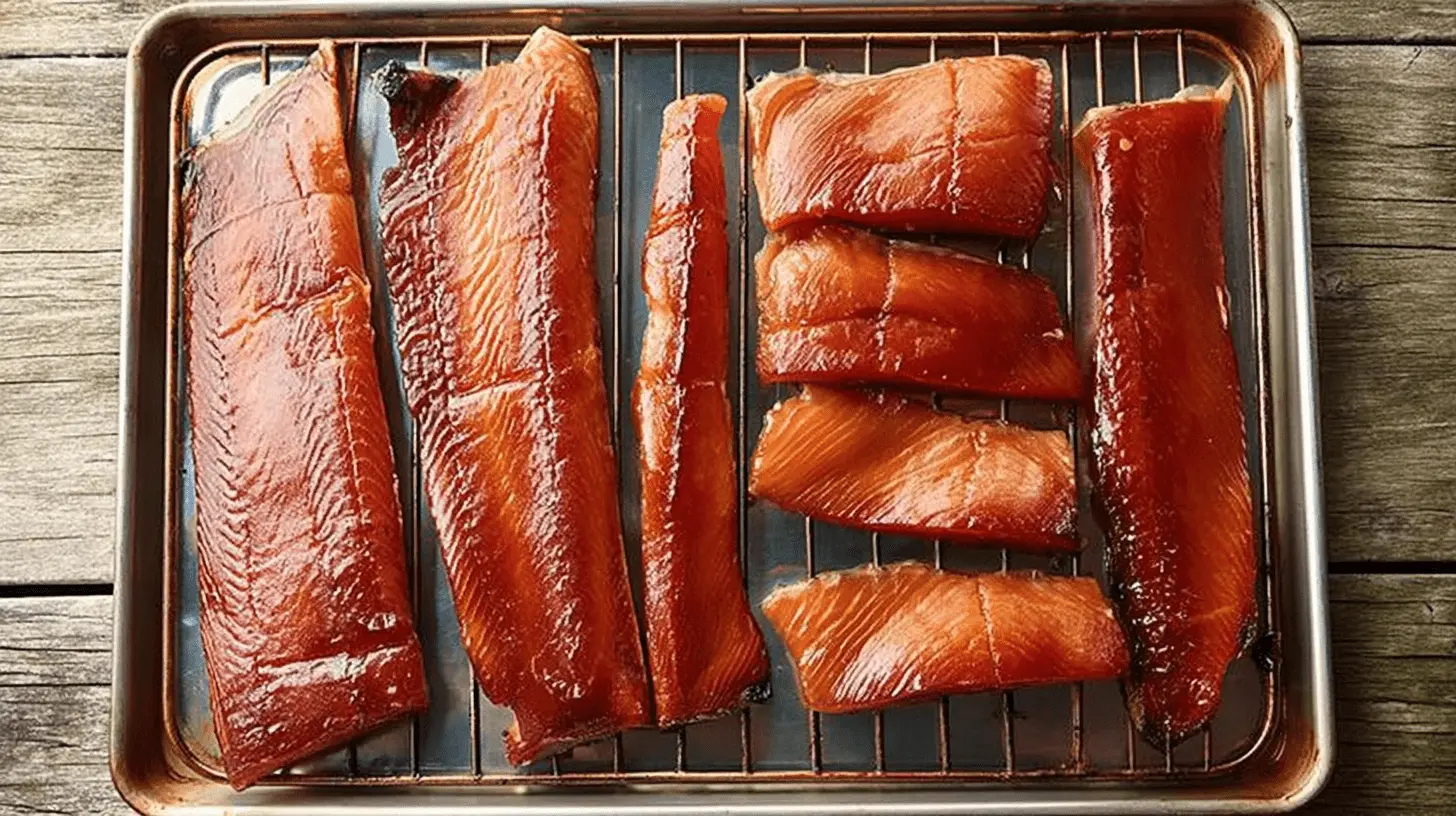
Hot Smoked Salmon Recipe: A Beginner’s Guide to Delicious Home Smoking
Ingredients
Equipment
Method
- Mix brine ingredients, place fish in a non-reactive container, cover, and refrigerate to cure the fish, removing moisture and infusing with salt.
- Cure salmon for at least 4 hours, or up to 36 hours for thicker cuts, ensuring the fish is fully submerged; do not exceed 48 hours to prevent excessive saltiness.
- Remove fish from brine, rinse, pat dry, and place on a cooling rack in a cool, breezy spot for 2-4 hours to develop a pellicle, crucial for proper smoking and smoke adhesion.
- Oil the fish skin and begin smoking at low temperatures (140-150°F for an hour), gradually increasing to 175°F for another 1-2 hours, using water or ice in the drip pan to maintain mild heat and prevent albumin bleed.
- Baste the fish hourly with syrup or honey to brush away any albumin, aiming for an internal temperature of 130-140°F.
- Emphasize maintaining gentle heat to prevent albumin bleed, which results from high temperatures causing protein extrusion and dry fish; a well-formed pellicle also helps.
- After smoking, let the fish rest on a cooling rack for an hour, then refrigerate for up to 10 days, vacuum-seal for up to 3 weeks, or freeze for up to a year.
Notes

Emily Thompson is a home cook and food enthusiast who believes that great meals bring families together. She loves exploring creative twists on classic American comfort food, always testing new ideas in her kitchen. Emily is passionate about sharing simple, practical recipes and time-saving tips to help busy people enjoy cooking at home. Her approachable style makes every dish accessible, delicious, and perfect for those seeking inspiration for everyday meals and special occasions. Find Emily’s latest creations and kitchen wisdom on yumeasymeals.com.